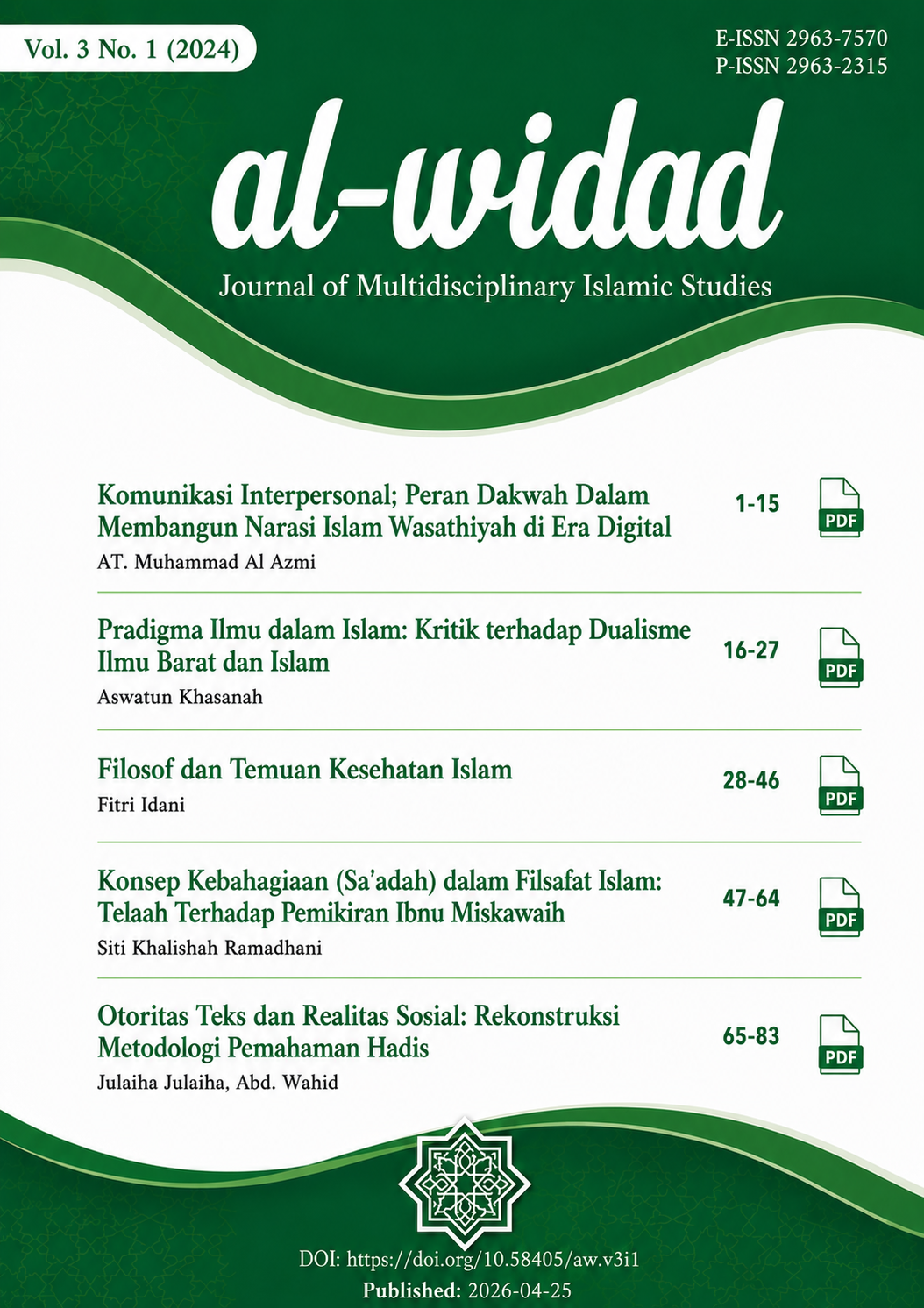
Otoritas Teks dan Realitas Sosial: Rekonstruksi Metodologi Pemahaman Hadis
DOI:
https://doi.org/10.58405/aw.v3i1.91Keywords:
Social Reality, Hadith Methodology, Integrative ReconstructionAbstract
The methodology for understanding hadith should maintain a balanced relationship between the authority of the hadith text as the normative foundation of Islamic teachings and the changing social realities in which its values are implemented. In practice, however, contemporary hadith studies remain polarized between textual approaches that prioritize the literal meaning of the text and contextual approaches that emphasize historical settings and social dynamics. This dichotomy often results in interpretations that are insufficient to address contemporary issues comprehensively. This study aims to analyze the relationship between the authority of hadith texts and changing social realities, identify the limitations of both textual and contextual approaches, and reconstruct a methodological framework that proportionally integrates textual authority with contemporary social realities. This research employs a qualitative library research design using descriptive-analytical methods supported by content analysis, comparative analysis, and conceptual synthesis of classical and contemporary literature. The findings indicate that both approaches possess significant strengths and inherent limitations, making an integrative methodology necessary. The proposed framework positions sanad criticism, matn criticism, linguistic analysis, historical context, maqāṣid al-sharī'ah, and social reality analysis as interconnected stages in understanding hadith. This integrative model is expected to preserve the authenticity and normative authority of hadith while enhancing its relevance in addressing contemporary societal challenges.
Downloads
References
Al Ikhlas, A. I., Yusdian, D., Alfurqan, A., Murniyetti, M., & Nurjanah, N. (2021). The Concept of Maqasid al-Shariah As an Instruments of Ijtihad According to Imam al-Shatibi in al-Muwafaqat fi Ushuli Al-Shariah. Media Syari’ah : Wahana Kajian Hukum Islam Dan Pranata Sosial, 23(2), 208–218. https://doi.org/10.22373/jms.v23i2.10138
Anam, W., & Sulaeman, M. (2022). Reinterprestasi Hadis Mesoginik Kepemimpinan Wanita Dalam Musnad Ahmad Perspektif Maqasid Al-Shariah. Al Quds : Jurnal Studi Alquran dan Hadis, 6(3), 1129–1154. https://doi.org/10.29240/alquds.v6i3.5172
Andaluzi, F., & Prameswari, D. G. (2025). The Authority Of Hadith In Contemporary Discourse: Rereading The Views Of Orientalists, Occidentalists, And Modern Scholars. Universum, 19(1), 105–128. https://doi.org/10.30762/universum.v19i1.3353
Andrian, I. N., & Amar, R. (2024). Pendekatan Kontekstual Dalam Memahami Hadis Dan Aplikasinya Terhadap Hadis Kepemimpinan Perempuan. Yustisi: Jurnal Hukum dan Hukum Islam, 11(3), 185–193. https://doi.org/10.32832/yustisi.v11i3.17885
Harefa, S. (2025). The fundamental principles of Islamic law in the digital era: An ushul fiqh and maqashid Sharia approach. Journal of Islamic Law on Digital Economy and Business, 1(1), 84–99. https://doi.org/10.20885/JILDEB.vol1.iss1.art6
Hidayat, S., Ahadi, A., & Wiranata, R. R. S. (2026). The textual and contextual approaches in hadits study. Islam in World Perspectives, 5(1).
Hilman, M. H., & Ummam, N. I. (2020). Pendekatan dalam Memahami Matan Hadis (Double Movement Fazlurrahman). Journal of Hadith Studies, 3(2), 73–85. https://doi.org/10.32506/johs.v3i2-02
Irwansya & Taufikquraman. (2023). Makna Hakiki dan Majazi Hadis Nabi: Studi Komparatif Pemikiran Ali Mustafa Ya’qub dan Arifuddin Ahmad. Jalsah : The Journal of Al-quran and As-sunnah Studies, 3(1), 114–138. https://doi.org/10.37252/jqs.v3i1.400
Isnayanti, Mallo, M. G. R., & Ardhani, M. N. (2026). Hadith Authority in Late Modern Islamic Ethics: Reframing Transmission, Rational Deliberation, and Normative Moral Reasoning. Dialogues in Qur’anic and Hadith Studies, 1(1), 77–101.
Laililrizqi, L., Finnas, F. F., Saeban, K., & Manshur, A. (2026). Konstruksi Otoritas Hadis dalam Tradisi Keilmuan Islam: Relevansi Klasifikasi Sahih, Hasan, dan Daif di Tengah Dialektika Klasik dan Modern. Pedagogic: Indonesian Journal of Science Education and Technology, 6(3), 391–402. https://doi.org/10.54373/ijset.v6i3.5508
Mustafa, Z. (2020). Problematika Pemaknaan Teks Syariat Dan Dinamika Maslahat Kemanusiaan. Mazahibuna: Jurnal Perbandingan Mazhab, 2(1), 37–58.
Nikmah, S. (2020). Validasi Pemahaman Ishari Terhadap Hadis. Al Isnad: Journal of Indonesian Hadith Studies, 1(1), 11–18. https://doi.org/10.51875/alisnad.v1i1.24
Norfauzan, Moh. (2021). Genealogi Pendekatan Historis-Sosiologis Fazlur Rahman dalam Memahami Hadis. Kaca (Karunia Cahaya Allah): Jurnal Dialogis Ilmu Ushuluddin, 11(2), 144–161. https://doi.org/10.36781/kaca.v11i2.130
Nur, I., Fithriy, H. N., Ilmas, D. N. A. N., & Wakhid, A. A. (2023). Human Rights, Gender, and Science in the Perspective of Maqāṣid Sharī’ah. Human Rights, 23(2), 311–340.
Nuraini, N. (2024). Analyzing Hadith Sanad Validity: Steps to Assess Acceptance and Authenticity. El-Sunan: Journal of Hadith and Religious Studies, 2(1), 56–69. https://doi.org/10.22373/el-sunan.v2i1.5463
Nuraini, N., & Saadah, D. (2026). Pendekatan Historis-Sosiologis dalam Studi Teks Hadis: A Historical-Sociological Approach to the Study of Hadith Texts. AL ISNAD: Journal of Indonesian Hadith Studies, 7(1). https://doi.org/10.51875/alisnad.v7i1.931
Putra, A. M. (2022). Menjembatani Teks dan Realitas: Tipologi dan Relevansi Asbāb al-Wurūd dalam Kajian Hadis Kontemporer di Indonesia. Journal of Hadith Studies, 5(1). https://doi.org/10.32506/johs.v5i1-05
Samsukadi, M. (2021). Al-Bayan wa al-Ta’rif fi Asbab Wurud al-Hadith al-Sharif (Studi Konteks Historis Teks Hadis No. 16-20 Karya Ibn Hamzah). Jurnal Hukum Keluarga Islam, 6(1), 39–60.
Suhaimi, & Mahbub, S. (2021). Menelisik Autentisitas Sebuah Hadis: Studi Atas Kaidah Keshahihan Hadis Ditilik Dari Sanad Dan Matan. Jurnal Penelitian dan Pemikiran Keislaman, 8(2), 214–224.
Syauky, A., Nurmila, & Ariani, S. (2025). Integrasi Pendekatan Tekstual dan Kontekstual terhadap Hadis Sahihdi Era Modern. El Nubuwwah: Jurnal Studi Hadis, 3(1), 47–80.
Tasbih, M., Mustin, H., & Zaenab, A. (2025). Kritik Sanad (Naqd Al-Sanad) Dalam Ilmu Hadis: Metodologi dan Implementasinya. Socius: Jurnal Penelitian Ilmu-Ilmu Sosial, 3(1), 852–858. https://doi.org/10.5281/ZENODO.16277823
Zaenuri, A. (2023). Classical And Modern Exegesis Styles: The Evolution Of The Development Exegesis Styles From Classical And Modern Periods. Jurnal At-Tibyan: Jurnal Ilmu Alqur’an Dan Tafsir, 8(1), 20–38. https://doi.org/10.32505/at-tibyan.v8i1.6007
Downloads
Published
How to Cite
Issue
Section
License
Copyright (c) 2026 Al-Widad

This work is licensed under a Creative Commons Attribution-ShareAlike 4.0 International License.